Starting a conversation with your child or teen about mental health, and where they can go for help can feel tricky. The good news? You don’t need to have the perfect words.
Whether you’re talking to a primary school aged child or a teen, these simple conversation starters can help you confidently introduce Kids Helpline in an age-appropriate way.
“Many young people contact Kids Helpline because an adult in their life once mentioned it. Sometimes that conversation happened years earlier – and it stayed with them until they needed support most.”
– Amanda, Kids Helpline Counsellor
Step 1: Learn more about Kids Helpline
First things first, let’s equip you with the stuff kids will want to know…
Kids Helpline helps kids.
You can talk to Kids Helpline about anything.
You can talk for a short time or a longer time.
It's safe for kids to talk to Kids Helpline on the phone.
The people (counsellors) at Kids Helpline care about kids and are very nice.
It’s okay if you don’t know what to say – the counsellor will help by asking questions.
Kids often talk about their feelings (like feeling sad, worried, or angry) or problems (like making friends).
You don’t need to cover all of this in one go. Pick what works best for your child – a little information at a time is more than enough.
Step 2: Starting the conversation with your kid
With young kids, keeping the focus on feelings is a powerful first step. Learning to recognise and name feelings in themselves and others, helps children understand what’s going on inside them – and how to deal with it in healthy ways. Try starting with:
Games
“Let’s play a feelings game! I’m going to act out a feeling – can you guess what it is?” "Your turn! You act out a feeling and I'll guess!"
Books
“What feeling do you think that face is showing? How do you know?” "What about this person? What do you think they're feeling? Why?"
Body clues
“Did you know our body can give us clues about our feelings? What does your body feel like when you’re worried?” (e.g. butterflies in tummy).
Step 3: Now it's time to introduce help-seeking in a gentle way
Once you’re talking about feelings, you can introduce help-seeking as one of many ways to cope.
- “When you’re worried, what helps you feel better?”
- “Talking can really help too. Who could you talk to when you’re feeling like that?”
- “Did you know there are special people whose job is to help kids with their feelings? At school, there’s the school counsellor. And at home, there’s Kids Helpline.”
- “Oh, I know! Let’s see what Kids Helpline says we can do to try to feel better!” (and show them this website).
Pro tip: watch this video with your kid to help them engage even more!
Talking to kids: our counsellors' fave tips
Use real moments and stories as conversation starters
Chances are your child, or their friends, have stuff going on in their lives that create natural opportunities to talk (it could even be a story about yourself growing up!)
For example, you might start:
- “It’s really sad that your friend’s dog died. How are you feeling about it?”
- “Your teacher said you didn’t play with anyone at lunch today. Can you tell me what happened?”
- And for the KPop Demon Hunter fans: “Rumi feels like she’s not good enough. Do you ever feel that way?”
From there, you can gently add:
“Talking about your feelings can help. Many kids talk about things just like this with Kids Helpline.”
Help your kid feel less nervous about calling by talking it through
We get it – calling can be scary (especially for today’s kids!). Help demystify it by explaining what will happen:
“You put the numbers in and press call. The phone rings, and you hear a message. Then a counsellor answers and says, ‘Hello, Kids Helpline.’ You can say your name and age, or just say you want to talk.”
You can also let them know an older sibling or trusted adult can help them call and explain things first.
Have some fun while talking about wellbeing!
Kids learn best through play. You could take turns ‘role-playing’ calling for help on the phone. Or, you could pretend you’re getting help for a toy who is feeling sad and lonely. Or use one of our Kids Helpline resources below to make learning fun.
Kids Helpline fun resources for kids
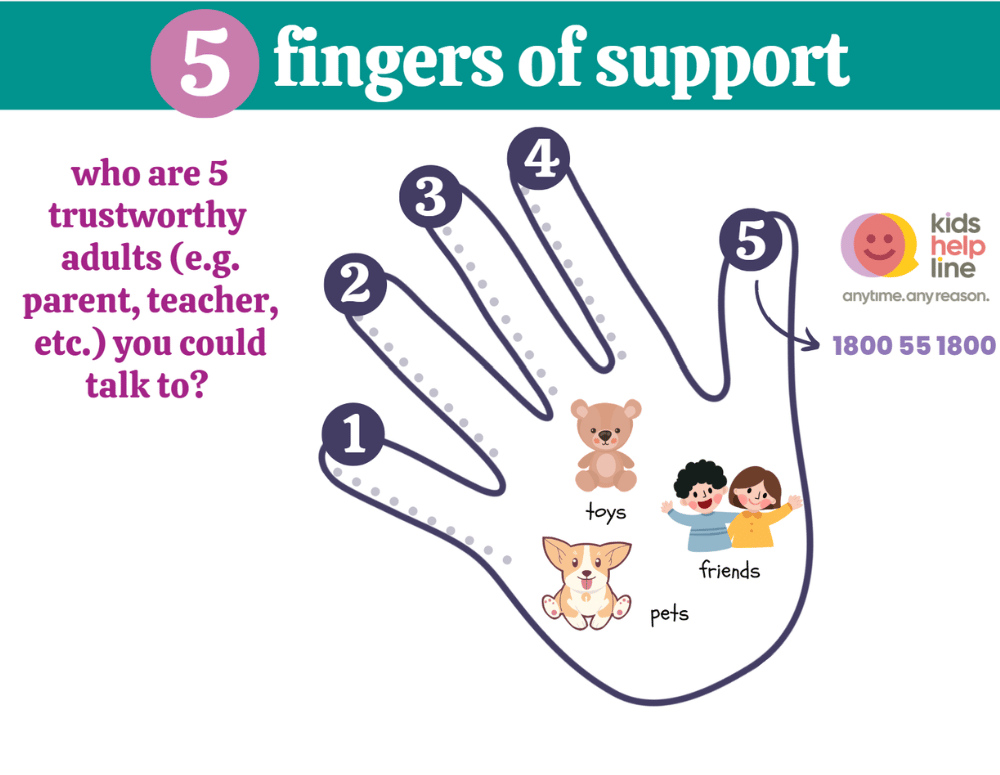
5 fingers activity
Make Kids Helpline one of your child's 'safe people'.
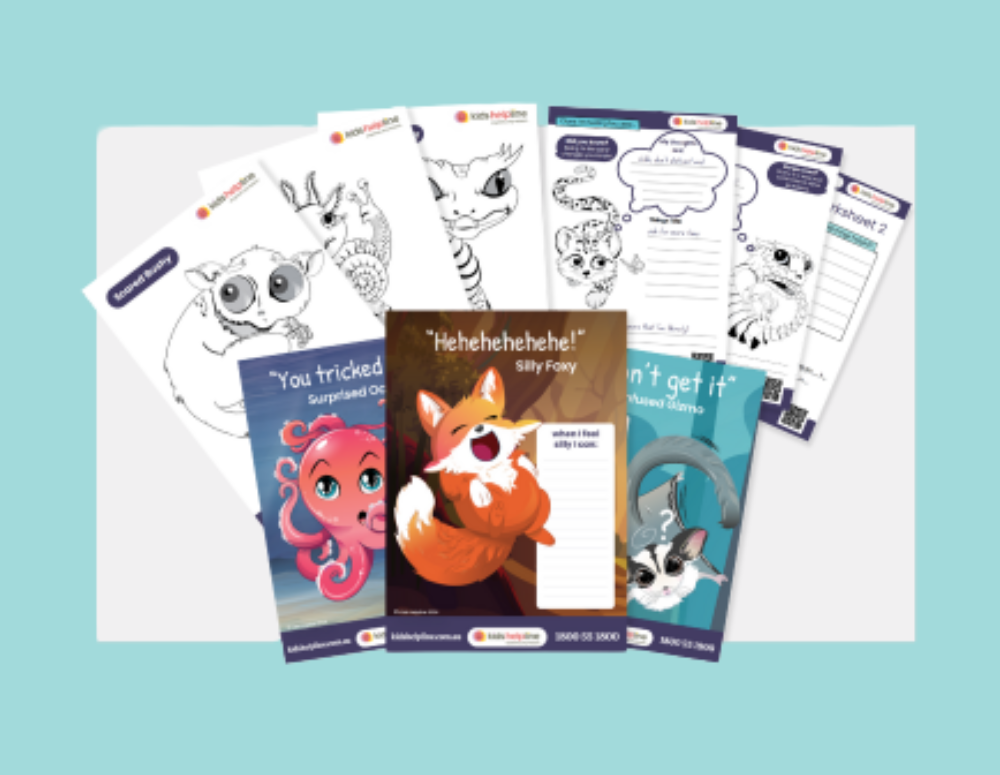
Mood Critters
Download and print these colouring in sheets!
Watch a video
Learn about stress, anxiety, and your brain!
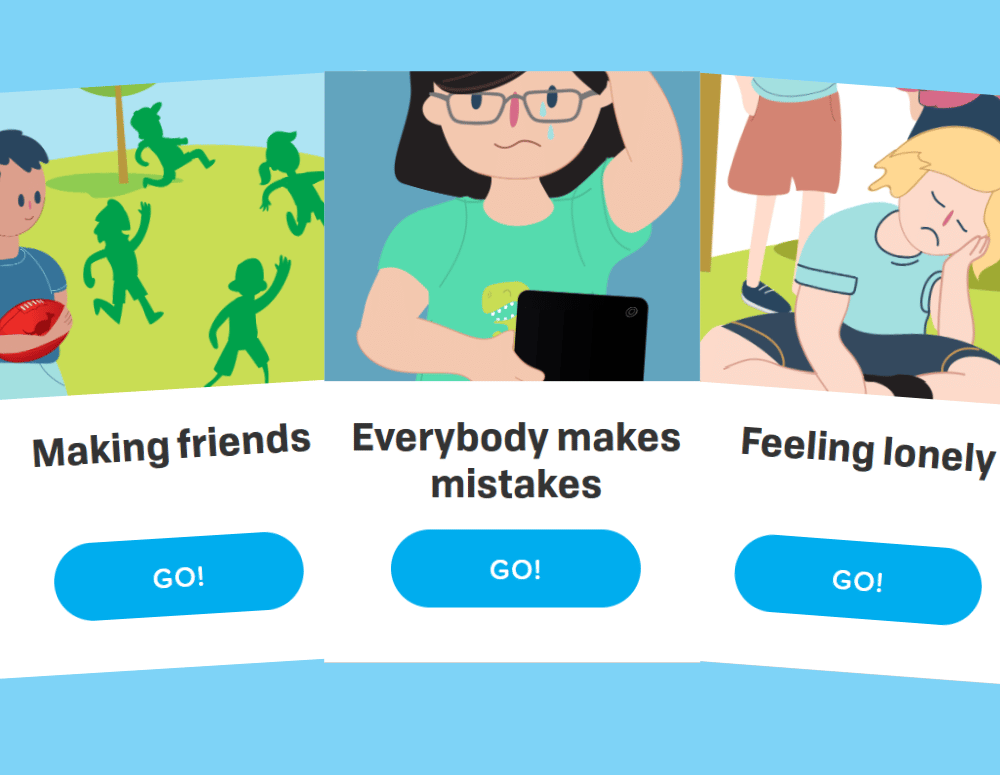
Stories for kids
Read some short, illustrated stories together.
Step 1: Prep by learning some new background info on Kids Helpline
The top stuff teens want to know... according to them!
They can be anonymous if they want to.
What they share is private and confidential.
The most common age group to use the service is teens.
Kids Helpline isn’t just for kids – it's for people aged up to 25.
They can talk with a counsellor on the phone or online (like a live DM).
It’s free, available 24/7, and can provide in-the-moment support or ongoing counselling.
All our counsellors are qualified professional counsellors (so you know it’s good support!).
Step 2: Starting the conversation with your teen
General mental health conversations can be a low key way to check in and help teens learn about support before they need it.
Pro tip: talking openly (even about taboo topics) helps make them safer to discuss and shows your teen they can talk to you without being judged.

Context
Pick the right time and place. The best moments are when you’re both relaxed, have privacy, and can sit side by side — like in the car or on a walk.
Curiosity
Ask general, open-ended questions, like:
- “What do you know about depression and anxiety?”
- “How would you rate your mental health out of 10? What does that number mean?”
- “How do you and your friends look after your mental health?”
- “Where would you go if you needed professional help? What would you say or do?”
Current events
Use real-world hooks!
- “I know your friend has been really struggling lately. Have you both checked out Kids Helpline? Why don’t you check it out and send them anything you think might help?”
- “I just saw this video from Kids Helpline – did you know that about anxiety and the brain?!”
- “I heard about this thing called ‘sextortion’ the other day! It’s where teens send nudes to someone they think is their age, but it turns out that person isn’t a teen, and they threaten to share their nudes unless they get money...”
Step 3: Suss out Kids Helpline together. Not just the counselling stuff, but all the things we offer.
There are so many ways to engage with Kids Helpline! From articles about mental health to chatting to other teens about similar experiences, check these out…
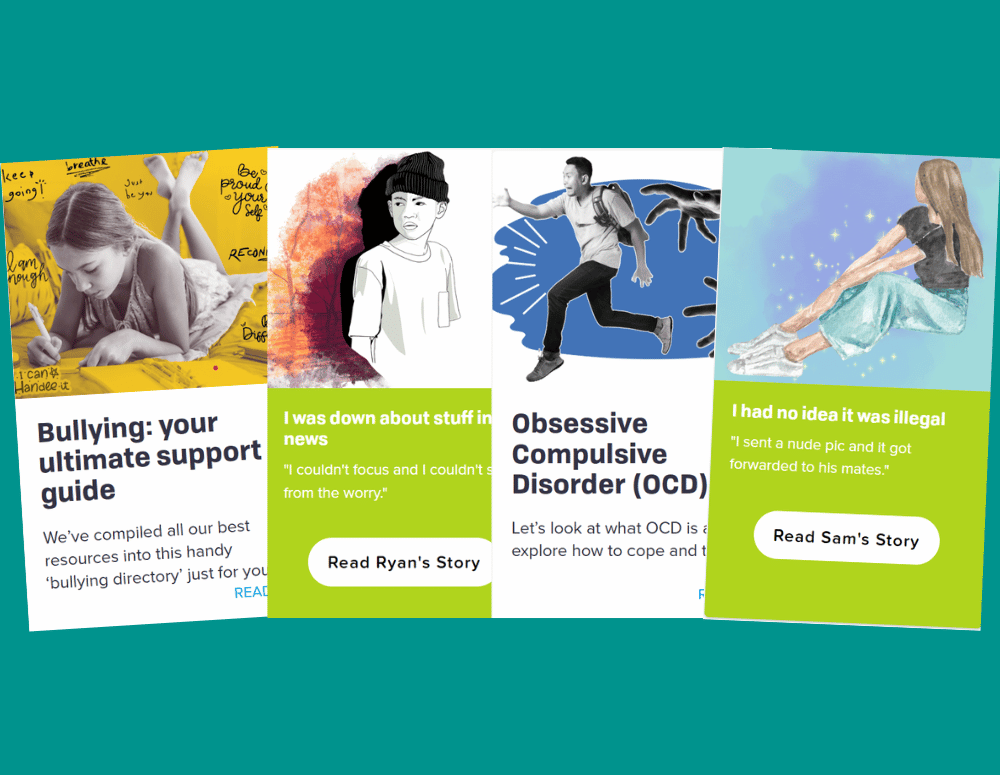
Self-help
We have counsellor created articles on a range of topics, as well as real life stories by young people.
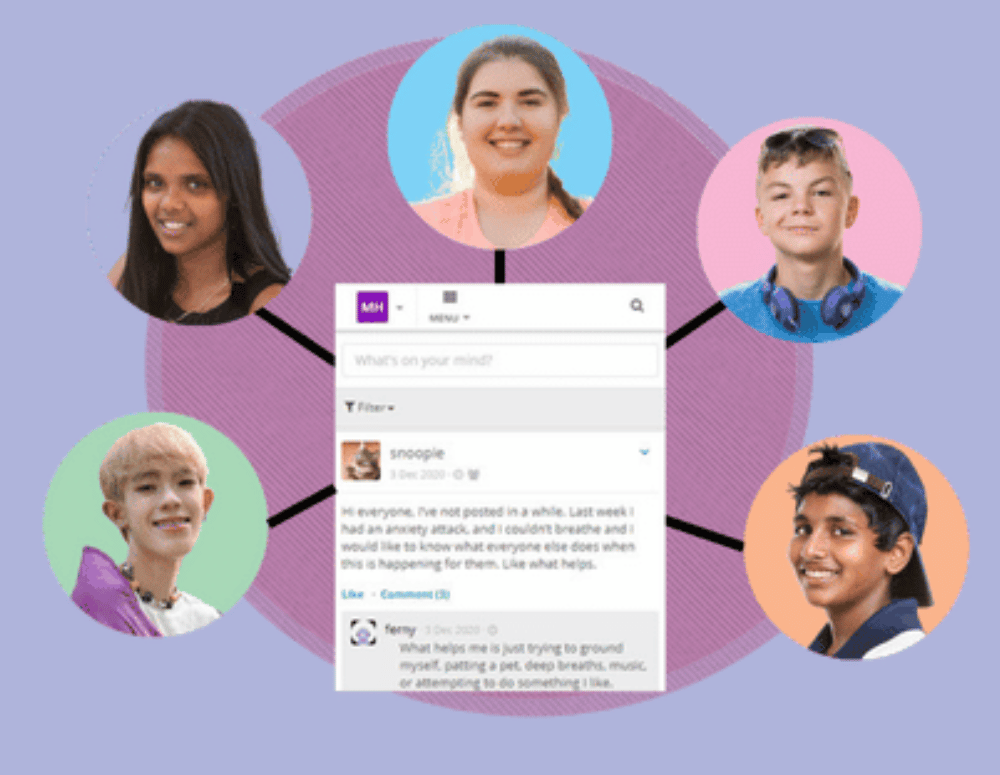
Online peer support
We have our own social media platform where teens can support each other (moderated for safety).
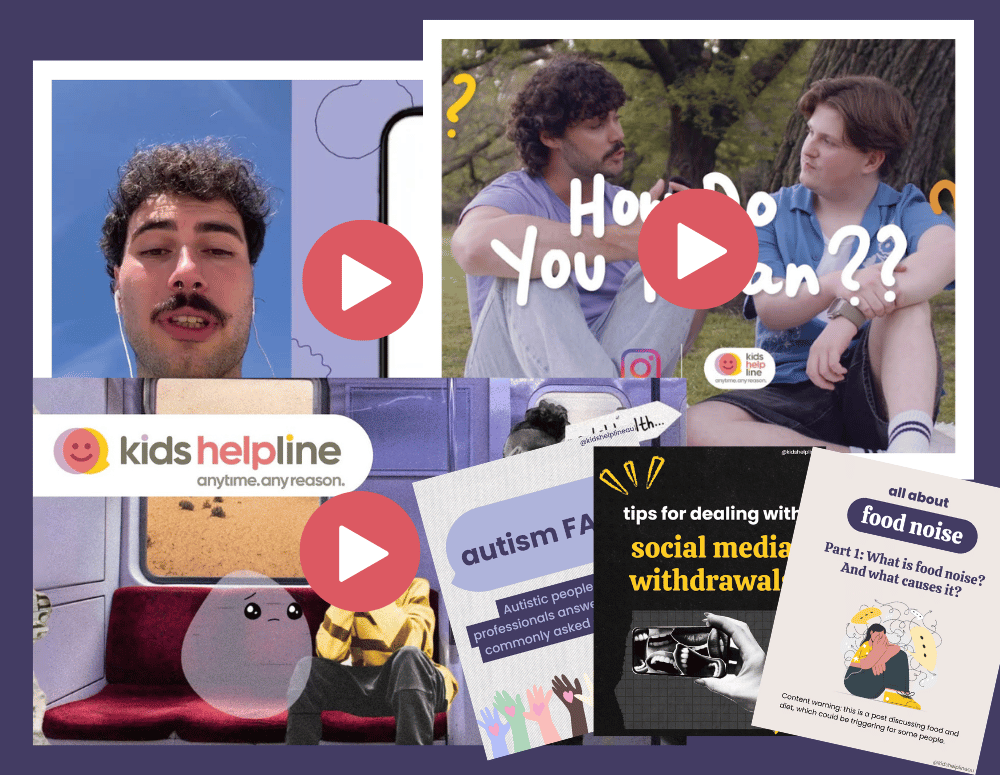
Videos & more!
We have a video library on a range of topics. And for those 16 and over, follow us on socials for the latest!

Mental health app
Download Qwibbl, a free app built by young people and back by Kids Helpline counsellors.
Talking to teens: our counsellors' fave tips
My teen is too cool to care about my recommendation
You’d be surprised! So many teens call because an adult in their life recommended the service.
Sometimes they roll their eyes. Sometimes they say they’d never do something like that. But they remember — and you may never know if they used it.
Telling them anyway could make all the difference. And you could always frame it as, "I'm telling you this in case one of your friends ever needs it".
Use Kids Helpline as a 'get out of jail free' card
It’s quite common for teens to reach out to Kids Helpline to talk through something they feel they ‘can’t’ tell their parents.
Top tier parenting level – let your teen know:
- It’s okay to talk to trustworthy adults outside the family
- They can be anonymous and private
- They can say or type things that feel hard to say face-to-face
Even if they never tell you they called, you can feel reassured knowing they’re getting professional support.
Got concerns about your child or teen right now?
If you’re seriously concerned about your child’s mental health or safety, there’s extra support available for parents and carers.
Kids Helpline has a range of great resources written by qualified counsellors who specialise in child mental health.
You can also contact your local Parentline service in your state for parent counselling support.
Want to do even more to support Kids Helpline and young people? Donate, fundraise or explore other support options.
Check these out too:
Supporting a child who is thinking of suicide
As a parent, it’s frightening to hear your child talk about ...
READ MEMy child struggles with mental health
It's hard to know how to help your child when they're having ...
READ MESelf-harm explained
Finding out a child has been self-harming can be scary and confusing. ...
READ MEEmpowering young people to ask for help
Being able to ask for help when you need it is an ...
READ ME